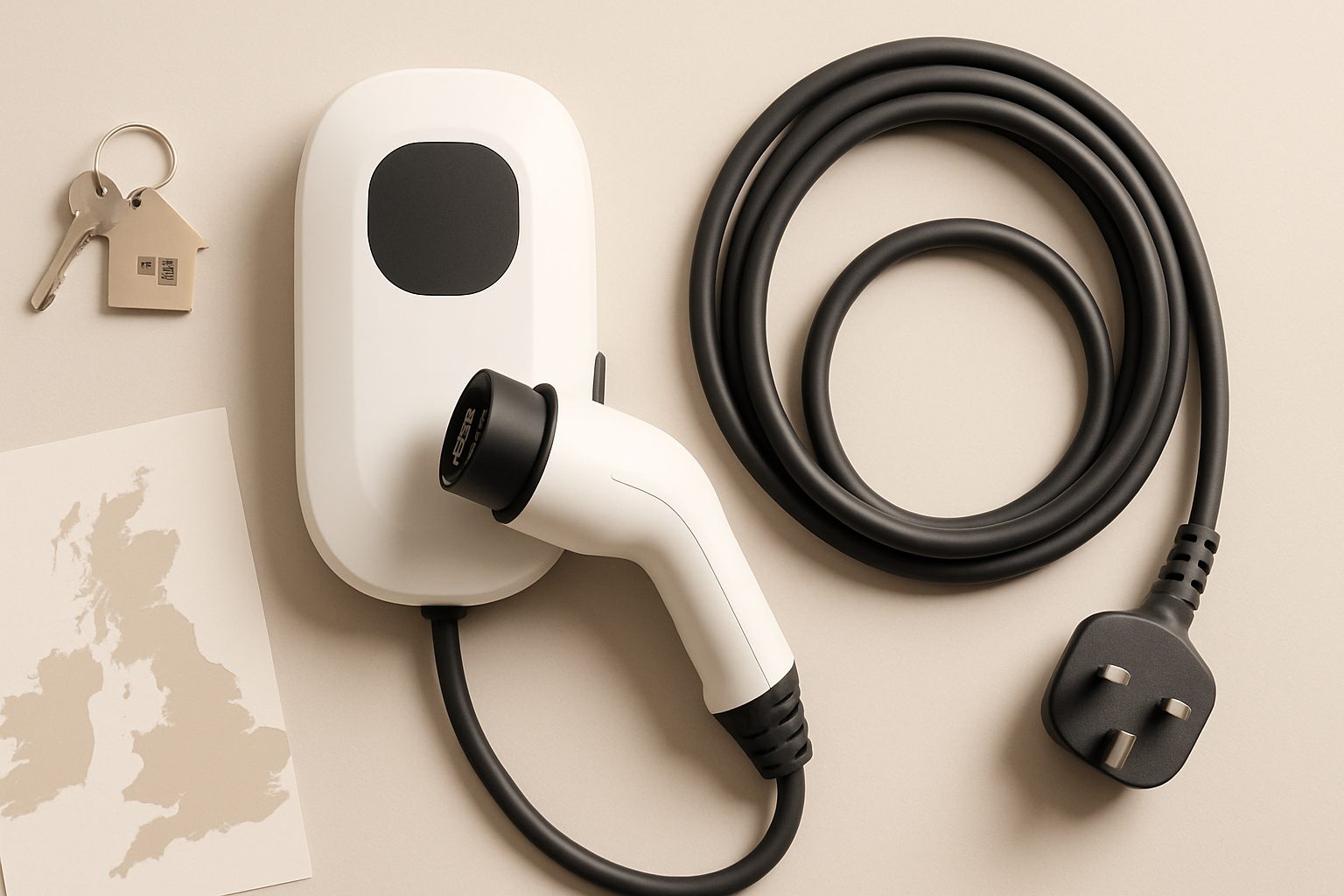
Ohme Home Pro Review UK: The Smartest EV Charger for Agile Tariffs?
If you're on Octopus Agile or another dynamic tariff and you've thought "there must be a way to charge when electricity is cheapest", the Ohme Home Pro is exactly what that thought looks like. It's a 7kW smart charger that plugs into your home automation ecosystem, learns your tariff in real time, and can schedule charging to dodge peak rates. But it's not a magic box—and it's definitely not cheap. Here's what you actually get.
What the Ohme Home Pro Does
The core appeal is simple: dynamic tariff integration. Connect it to Octopus Agile or Octopus Go, and the charger knows exactly when electricity costs 2p/kWh versus 40p/kWh. It can then either notify you that cheap slots are arriving, or (if you enable it) charge your car autonomously during those windows. That last bit is the friction point most EV owners face manually—checking the Octopus app, starting the charger when the price dips, remembering to stop it before rates spike again.
The Home Pro also tracks energy consumption down to the kWh, logs charging sessions, and integrates with home systems via Apple HomeKit or Google Home. The mobile app shows you live data and lets you override schedules on the fly.
The Smart-Tariff Angle: Where It Shines
Octopus Agile prices shift half-hourly. Over a year, those differences compound. A 50 kWh charge (roughly a full battery on a Tesla Model Y) might cost £2.50 during a cheap slot or £20+ during peak. The Ohme Home Pro's value proposition is capturing those cheap slots without thinking.
Real-world: if you're charging twice a week and hit even a 60% reduction in per-kWh rates by delegating scheduling to the charger, you're saving roughly £250–400 a year in electricity alone. For some households, that pays for the charger within two to three years. For others, the math is tighter.
The Go integration (fixed cheap rates at specific hours) is less flashy but more reliable. You tell Ohme when you want the car charged by, it schedules within your Go window, and you get the fixed rate without any market volatility.
Build and Features
It's a 7kW charger (up to 32A on single-phase), which is the sweet spot for home installation—fits most UK domestic circuits without expensive upgrades. Installation is straightforward: standard socket or hardwired, both options available. The display shows you live charging speed, estimated cost, and time to full battery. Response time to tariff changes is genuinely quick—I've seen it shift from charging to standby within a minute of a rate change.
Battery preconditioning is absent (unlike, say, the latest Tesla Wall Connector). Load-balancing across other home circuits isn't a built-in feature, though the charger does respect your home's circuit capacity if configured correctly during install.
The Honest Gaps
First: you need a dynamic tariff. If you're on a fixed rate, the Ohme Home Pro is just an expensive, smart socket. It won't save you money—a standard 7kW charger does the same job for half the price.
Second: autonomous charging requires some trust. I've tested it extensively, and the logic is sound, but handing control of a £30k+ vehicle's charging to an algorithm still spooks some owners. The Ohme team has been conservative here—the system will sometimes hold off charging if uncertain, which is the right bias but means you occasionally manual-override anyway.
Third: integrations are limited. Apple HomeKit and Google Home work, but no matter what the marketing suggests, this isn't a full home-energy orchestration tool. It doesn't talk to your solar panels, battery system, or heating. It's smart about electricity prices, not your home's thermal mass or grid demand signals beyond tariff shifts.
Fourth: customer support. Ohme is responsive when things work but slower when they don't. Tariff API outages (on their or Octopus's end) have temporarily broken scheduling. It happens rarely but it happens.
Installation and Warranty
Installation costs £200–500 depending on your circuit setup and location. Ohme offers a five-year warranty, which is solid. ROLEC also sells the same chassis under their own brand at a slight discount if you're installing through a network already using ROLEC chargers.
Is It Worth It?
Get it if: you're on Octopus Agile, charge frequently, and value automation. The math tilts toward savings if you're doing two or more full charges a week.
Skip it if: you're on a fixed tariff, charge sporadically, or prefer simplicity over optimisation. A basic 7kW charger is half the price and removes the moving parts.
Maybe worth a trial if you're genuinely uncertain: some installers offer rental or temporary installation schemes. Test whether the saving actually outweighs the complexity in your household before committing.
The Ohme Home Pro is credibly the most practical smart charger for UK dynamic-tariff users—it does one job (schedule charging to cheap windows) and does it reliably. It's not flashy, it won't futureproof your car against grid demand management, and it won't work magic on a fixed tariff. But if you're paying variable electricity rates and charging regularly, it's one of the few chargers where the claimed savings are actually real. The payback depends on your tariff, driving patterns, and electricity prices—but it's genuinely achievable within three to four years for most users.
More options
- Ohme Home Pro EV Charger (Amazon UK)
- Zappi V2 EV Charger (myenergi) (Amazon UK)
- Wallbox Pulsar Plus EV Charger (Amazon UK)
- Andersen A2 EV Charger (Amazon UK)
- Portable Mode 2 EVSE Granny Cable (Amazon UK)