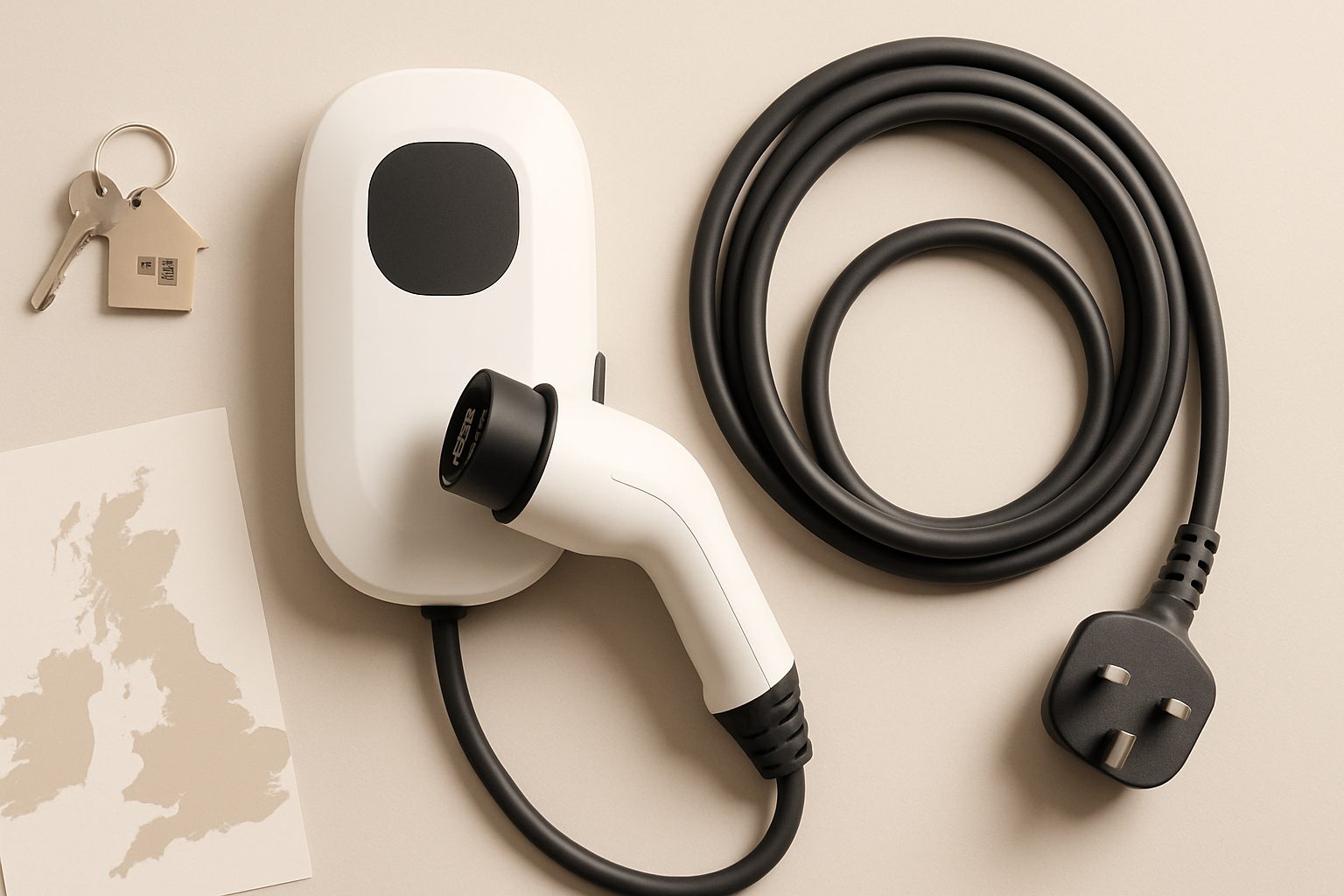
Home EV Charger Grants UK 2025: Who Qualifies and How to Apply
Installing an EV charger at home used to mean absorbing the full cost yourself. But the UK government still offers funding to make home charging more accessible—though the landscape has changed since earlier schemes wound down. If you're an EV owner weighing the investment, or a renter wondering if any support exists for you, here's what you actually need to know about grants available in 2025.
What Government Grants Are Currently Available?
OZEV Electric Vehicle Homecharge Scheme (EVHS)
The most relevant scheme for most homeowners is the OZEV Electric Vehicle Homecharge Scheme. It offers grants toward the cost of installing a dedicated 7kW charger at home. The current grant covers 75% of installation costs, capped at £350 per installation. This means if your installation costs £450, the grant covers £337.50 and you pay roughly £112 out of pocket. If installation exceeds £466, you'll pay the difference.
The EVHS is specifically valuable if you're renting or own a flat, because landlord consent isn't required for you to apply—though installation logistics remain your responsibility. Homeowners with dedicated driveways can apply too, and many do.
Workplace Charging Scheme (WCS)
If your employer has the scheme set up, the WCS can reduce the cost of chargers installed at work. This isn't relevant if you're purely looking to charge at home, but it's worth checking with your HR or facilities team, since it can substantially ease charging costs if you commute to an office.
Scotland and Wales Devolved Grants
Scotland offers additional support through its local authority schemes—eligibility and amounts vary by council area. Some councils provide top-up funding on top of OZEV grants or have their own schemes for residents in remote areas or those with specific needs.
Wales similarly has separate initiatives. If you're in either nation, it's worth checking your local council's website before applying for the main OZEV scheme, as you might combine support or qualify for alternatives.
Who Qualifies for the OZEV EVHS Grant?
Eligibility is straightforward but does have definite limits.
You must:
- Own an approved electric vehicle registered in the UK (or be in the process of buying one)
- Have off-street parking—a driveway, garage, designated parking bay, or communal parking area where a charger can be installed safely
- Not have already received an OZEV grant for a charger at that address
- Use an OZEV-approved installer
Your vehicle must:
- Be capable of charging at 7kW
- Be registered to a UK address
- Have zero tailpipe emissions
The off-street parking requirement is the main barrier for many people. If you park exclusively on-street with no access to a private or semi-private parking space, you won't qualify.
You don't need to own your home—renters absolutely can apply and install a charger in their parking bay, provided the landlord agrees to the installation. Some landlords are cautious, but the installation is typically straightforward and non-invasive (surface-mounted wall box, minimal cabling). Many landlords now actively permit or even encourage it.
How to Apply: Step-by-Step
Step 1: Check your eligibility. Confirm you have an approved EV and off-street parking. You can check your vehicle's eligibility on the OZEV website.
Step 2: Get quotes from OZEV-approved installers. You'll need at least one quote, though getting 2–3 is sensible practice. Approved installers are listed on the OZEV portal. Installation costs typically range from £400 to £800 depending on your electrics and parking setup. Once you have a quote, you've got a firm installation cost to reference.
Step 3: Apply online via the OZEV portal. You'll need to provide your vehicle registration, proof of ownership or a purchase agreement, address, and parking details. The installer's quote is attached. The portal is the official route—don't use third-party intermediaries, which add cost with no benefit.
Step 4: Wait for approval. Processing typically takes 4–6 weeks, though can extend during periods of high volume.
Step 5: Arrange installation with your approved installer. Once your grant is approved, the installer books a date and handles the physical work—usually a one-day job.
Step 6: The installer claims the grant from OZEV. You don't wait for reimbursement; the installer deducts the grant from your invoice before you pay. You only pay the difference.
The whole timeline from application to charging usually runs 8–12 weeks. If you're planning ahead, applying early in the tax year (April onwards) often means shorter queues.
Installation Costs and What Affects Them
A basic 7kW wall box installation in a straightforward setup (existing garage or driveway with nearby electrics) might cost £400–£500. Complications—like requiring significant cabling runs, upgraded electrics, or complicated parking arrangements—can push costs toward £800 or beyond.
The £350 grant cap means you'll always pay something out of pocket unless installation happens to cost exactly £466 or more (where 75% hits the cap). It's not a fully subsidised scheme, but it materially reduces the financial hurdle for most people.
Next Steps
If you qualify and want to proceed, the OZEV website is your starting point. Browse approved installers in your area, get a quote, and submit an application. If you're in Scotland or Wales, check your local council website in parallel—you might find complementary support.
Once installation is complete, the main decision becomes which charger type suits your vehicle and habits, and whether a faster (11kW or 22kW) charger is worth the extra cost. The 7kW standard covers most home charging needs overnight, but preferences vary by how far you drive daily and how quickly you want to recharge.
More options
- Ohme Home Pro EV Charger (Amazon UK)
- Zappi V2 EV Charger (myenergi) (Amazon UK)
- Wallbox Pulsar Plus EV Charger (Amazon UK)
- Andersen A2 EV Charger (Amazon UK)
- Portable Mode 2 EVSE Granny Cable (Amazon UK)