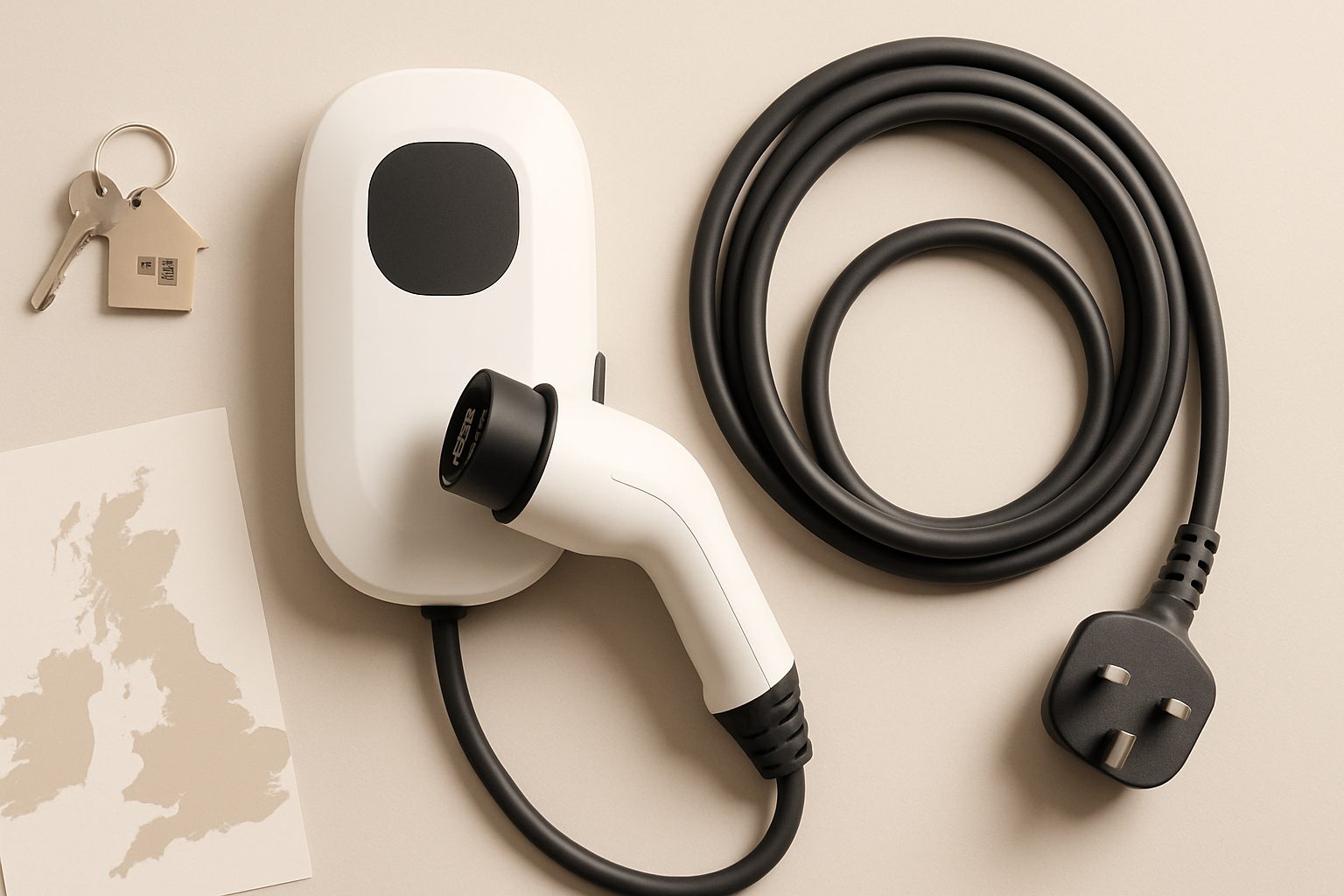
Home EV Charger for Renters UK: Your Rights, Options, and Best Units
Renting doesn't mean you're stuck waiting at public chargers forever. The Right to Charge Bill changed the landscape for UK tenants, and there are now realistic ways to charge at home—whether you own or rent. The catch: you need to understand your rights, get landlord buy-in, and pick the right equipment for your situation.
Your Right to Charge: What the Bill Actually Says
The Right to Charge Bill, introduced in 2022, legally requires landlords to consider requests for EV charging reasonably. That doesn't mean they can't say no, but they can't just ignore you or refuse without genuine grounds. A reasonable refusal might be structural (no safe way to route a cable, blocked parking), but "I don't want it" isn't enough.
If your landlord owns the building outright (not a management company), they're required to consider within 30 days. If a management company handles it, they must pass your request on. The key word is "reasonably"—a poorly reasoned rejection can be challenged, though that takes time and effort.
The bill covers fixed installations only. It doesn't force landlords to pay, and installation costs usually fall to you. What it does is prevent arbitrary blocking of a sensible request.
Portable EVSE: The Renter's Default Option
If your landlord drags their feet or the building layout is awkward, a portable EV charger sits outside the Right to Charge rules entirely. You don't need permission to use a Type 2 to 13A adapter or a compact portable charging unit on your own parking space.
The trade-off is speed. A 13A socket charges painfully slowly—roughly 2–3 miles of range per hour. You'll need an overnight charge for a full battery. Portable chargers are also less weather-proof than a fixed wall box, though decent models come with weatherproof cases.
For renters who charge once a week or park off-street at home, this is often enough. You're not relying on public infrastructure, and there's no installation hassle. It's also your property—you take it with you when you move.
Fixed Installation: Getting Landlord Sign-Off
If your landlord agrees, a wall-mounted 7kW charger transforms your charging experience. You'll get 25–30 miles of range per hour, meaning an overnight charge tops up most EVs completely.
The installation process is straightforward: notify your DNO (Distribution Network Operator) if the charger is over 3.68kW, hire a qualified EVCS installer, and they'll handle the rest. Costs run £800–£1,500 all-in for a 7kW unit and installation.
One renter advantage: if you move, some chargers can be uninstalled and taken with you (though reinstallation isn't always easy or cheap). More commonly, the equipment stays and benefits the next tenant—which some landlords actually see as a property upgrade.
OZEV EVHS Grant: Rental Property Chargers
If your landlord owns the building and qualifies, the Office for Zero Emission Vehicles (OZEV) offer a grant covering up to 75% of installation costs (capped at £350). This only applies to private landlords with residential properties, not large management companies.
The catch: the landlord must claim it. Many aren't aware the grant exists. If you're dealing with a sympathetic landlord, pointing this out can tip the balance—they get a cheaper installation, and you get your charger.
Best Chargers for Renters
For portable/temporary: The Ratio Charge IEC 60309 adapter or an Rolec 7kW portable pack. Both are weather-resistant, compact enough to move, and work with standard household sockets or industrial outlets if you find one.
For fixed installation: A 7kW unit is standard—any OZEV-approved model (Wallbox, Andersen, Zappi, Pod Point) will do. Choose one with remote monitoring if your landlord wants usage data. They're all reliable; pick based on design and whether you want smart-charging features.
For flats with shared parking: This is trickier. Communal chargers need building-wide agreement. If that's not happening, portable is your only option unless management approves a single pedestal-mounted unit on your allocated space.
Common Renter Obstacles
"The landlord won't respond." Document your requests in writing. Email is best—it creates a record. If you're in England or Wales and it drags on, the Right to Charge Bill gives you some legal ground, though it's slow to pursue.
"The building's too old for a charger." Have a surveyor look properly before you believe this. Many older buildings surprise you—rewiring is costly but possible. DNOs can also advise if the local grid can handle it.
"The parking is off-street but unsecured." Portable EVSE is vulnerable to theft or damage in public parking. A weatherproof case and locking cable help, but it's not ideal. If this is your reality, focus on public charging for longer trips and accept that home charging is slow-charge only.
Next Steps
If your landlord agrees to a fixed install, get three quotes from EVCS installers and check for OZEV eligibility. If they're hesitant, offer to cover costs or point out the grant. If they refuse, a portable charger keeps you mobile without waiting for permission.
For renters in flats without dedicated parking, a portable unit paired with regular public-charger use is often the realistic path. And if you're considering a move, prioritise properties with EV-ready parking or sympathetic landlords—it genuinely makes EV life easier.
More options
- Ohme Home Pro EV Charger (Amazon UK)
- Zappi V2 EV Charger (myenergi) (Amazon UK)
- Wallbox Pulsar Plus EV Charger (Amazon UK)
- Andersen A2 EV Charger (Amazon UK)
- Portable Mode 2 EVSE Granny Cable (Amazon UK)