Best Tethered Home EV Charger UK 2025: Top Picks for Convenience
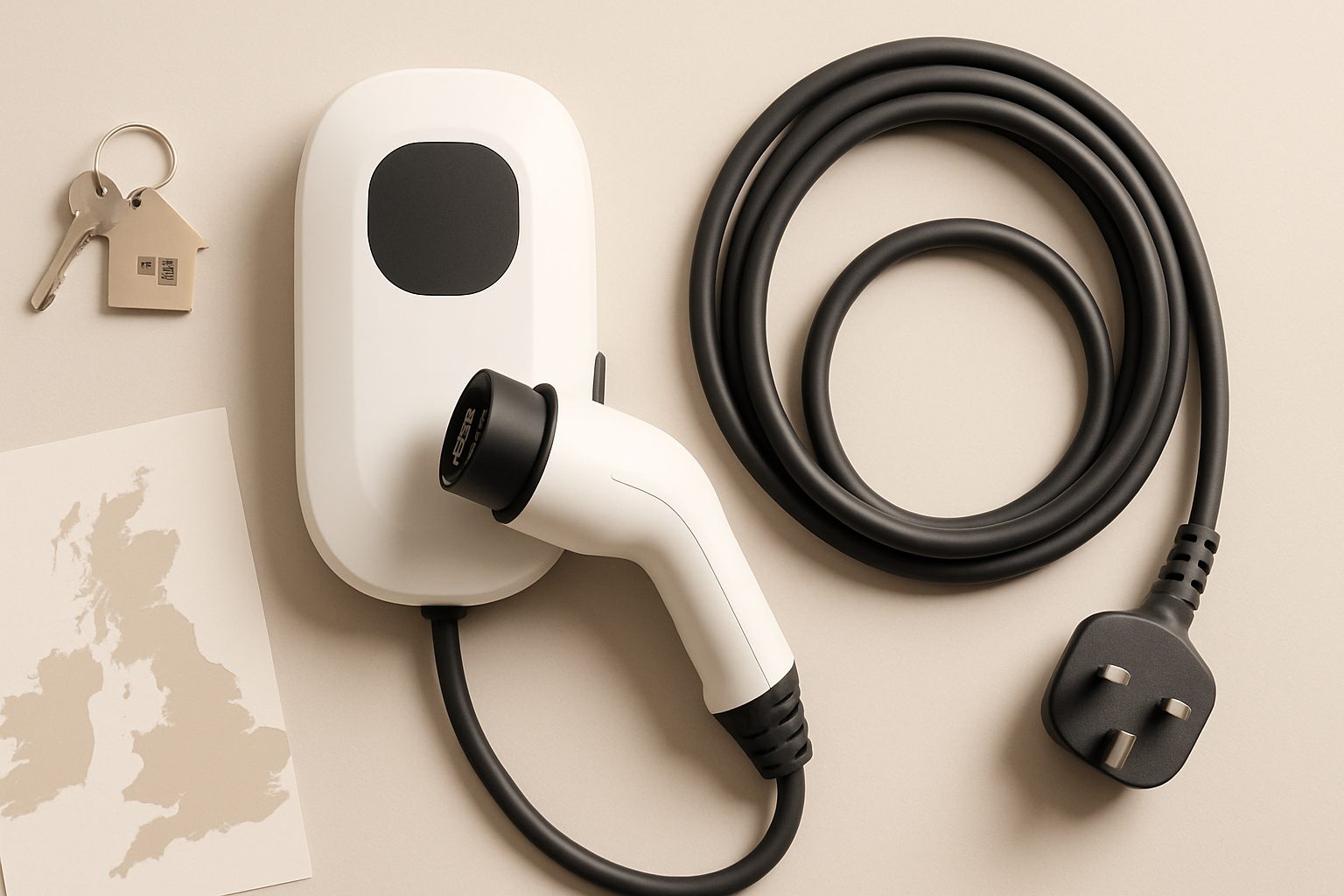
A tethered EV charger has the cable permanently attached rather than storing it separately, which brings both clear advantages and specific trade-offs. You won't lose or damage a coiled cable, installation is simpler, and many find it more convenient for daily charging. The downside is inflexibility—you're locked into whatever cable length the charger comes with, and replacing a damaged tether can mean replacing the entire unit rather than just swapping out a lead.
In the UK market, three models dominate this category: Pod Point Solo 3, Ohme Home Pro, and Zappi. Each takes a different approach to tethered design, which matters more than it might seem when you're installing a charger for the next decade.
Pod Point Solo 3
The Pod Point Solo 3 is the most common tethered charger you'll see in UK gardens, largely because it was one of the first to popularise the format. It comes with a 5-metre Type 2 cable, which covers most driveway-to-door scenarios without excess length creating trip hazards.
The unit itself is weather-sealed to IP54, meaning it handles spray and dust but isn't fully submersible. For a wall-mounted charger in typical UK conditions—even in areas where rain regularly blows horizontally—this is adequate. The Solo 3 delivers 7kW (single phase), which is standard for most UK homes. Charging a 60kWh battery from empty to full takes roughly 8 hours, suitable for overnight charging but not rapid.
Pod Point's build quality is solid plastic rather than the heavier metal you see in premium models, and the tether sits in a neat retractable clip system. That convenience comes with a minor quirk: the cable isn't removable without opening the unit, so if the connector or insulation degrades, you're looking at a full replacement rather than a quick fix.
The installation footprint is compact, around 45cm tall, which matters if your wall space is tight. Pod Point charges a reasonable installation fee through their approved installer network, typically £400–600 depending on circuit distance.
Ohme Home Pro
Ohme Home Pro is the premium choice in this group, with a heavier aluminium casing rated to IP66 (dustproof and powerful water-jet resistant). That's a meaningful step up in weather protection—this charger will tolerate more aggressive washing or coastal salt spray without degradation.
It also comes with a 7.5-metre Type 2 tether, giving you a bit more reach than the Pod Point. For homes where the charger must sit further from the vehicle's typical parking spot, that extra 2.5 metres removes a cable-strain problem. Power output remains 7kW, so charging speed is equivalent, but Ohme's integration with the Ohme app means you can monitor and schedule charging remotely—useful if you're trying to charge during off-peak hours when using a time-of-use tariff.
The build is noticeably heavier than Pod Point. If durability and longevity are priorities, that weight reflects better internal components and strain relief on the cable entry point. A weakness: Ohme Home Pro is more expensive (roughly 40% more than Solo 3), and replacement cables aren't widely stocked, so repair timescales can be longer if something fails outside the warranty period.
Installation is similar in complexity to Pod Point, though the solid aluminium case requires more careful positioning to avoid overheating in direct summer sun (less of a real issue in UK shade, but worth noting for south-facing walls).
Zappi
Zappi, made by Myenergi, is the outlier here because it's designed as a smart-energy charger from the ground up. Its tethered version comes with a 7-metre Type 2 cable and offers three power levels: 7kW (standard UK single-phase installation), 11kW, or 22kW (if your home has three-phase power, which is uncommon in residential settings).
Most UK buyers will use the 7kW version, matching Pod Point and Ohme in charging speed. Where Zappi differs is in monitoring and control. The app shows real-time energy draw, and the unit can integrate with solar PV systems, delaying charging until your panels generate enough power. For homes with solar, that feature genuinely changes the economics.
The chassis is polycarbonate rather than metal or full plastic, with an IP54 rating—equivalent to Pod Point but lighter than Ohme. The cable management includes a wall-mounted holster that's tidier than some competitors' approaches. One practical point: Zappi's connector is user-replaceable without opening the unit, so if your cable takes damage, you can swap just the connector instead of losing the entire charger.
Zappi is midway in pricing between Pod Point and Ohme, making it good value if you're willing to engage with the app-based features. If you want set-and-forget convenience, the extra complexity might not be worth it.
Key Considerations When Choosing
Cable length matters more than marketing suggests. A 5-metre tether is tight if your circuit breaker or fusebox is on the opposite side of your house from parking. Measure the real route before buying.
Connector type is genuinely important. Type 2 is now standard on nearly all new cars and on UK public networks, but if you own or expect to own an older vehicle or a commercial EV, confirm compatibility before purchasing.
Weather rating becomes relevant only if your charger faces salt spray, heavy industrial pollution, or unusual exposure. For a typical suburban or rural garage wall, IP54 is sufficient. IP66 is insurance against decades-long coastal corrosion.
Smart features (monitoring, scheduling, solar integration) add cost and complexity. They're valuable if you use time-of-use tariffs or have solar; otherwise, they're features you'll never touch.
All three chargers are reliable, installed by competent electricians throughout the UK, and come with decent warranty support. The right choice depends on your specific installation constraints, whether you value app-based control, and how much you're willing to spend for incremental durability.
More options
- Ohme Home Pro EV Charger (Amazon UK)
- Zappi V2 EV Charger (myenergi) (Amazon UK)
- Wallbox Pulsar Plus EV Charger (Amazon UK)
- Andersen A2 EV Charger (Amazon UK)
- Portable Mode 2 EVSE Granny Cable (Amazon UK)