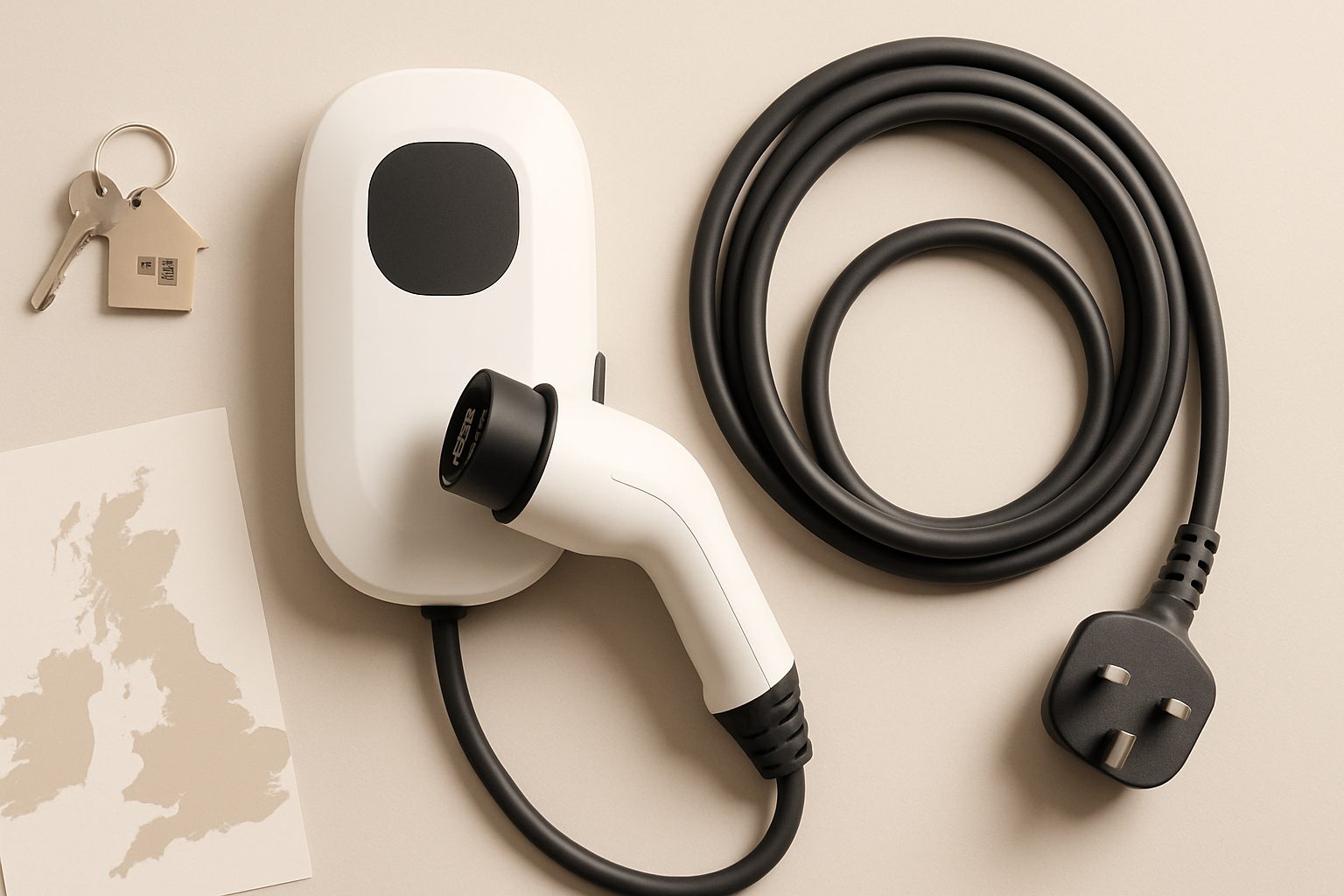
Best Home EV Charger for Tesla Model Y UK: Top 5 Compatible Units
If you've just bought a Tesla Model Y in the UK, you'll quickly realize that the 3-pin wall outlet your phone charger uses won't cut it. Home charging is essential for convenience and cost savings, but choosing the right unit requires understanding a few technical details—especially around compatibility, charging speed, and smart features that let you take advantage of cheaper electricity windows.
The Model Y supports Type 2 connectors (also called Mennekes), which is the standard across Europe and the UK. What matters most is your onboard charger capacity: the Model Y comes with an 11 kW onboard charger as standard, meaning you can't exceed that charging rate regardless of how powerful your wall unit is. Understanding this limit is crucial for avoiding overspend on features you can't use.
Why the Tesla Wall Connector Isn't Your Only Option
Tesla's official Wall Connector is excellent—it's reliable, integrates seamlessly with Tesla's app, and charges at the full 11 kW your car can handle. But it's not automatically the best choice for everyone. Third-party chargers from established manufacturers offer competitive performance, lower cost, and sometimes better smart-tariff integration with UK energy suppliers like Octopus Energy or EDF.
The key difference: Tesla's charger works brilliantly in Tesla's ecosystem, but you're paying for that integration. If you care about features like flexible scheduling tied to Agile or Flux pricing, some third-party units offer native integration that Tesla's charger doesn't yet match in the UK market.
Understanding Your Charging Speeds
An 11 kW wall charger will deliver roughly 40–48 miles of range per hour of charging, depending on battery efficiency. A 7 kW charger gives you 25–35 miles per hour. For most home owners, 7 kW is genuinely sufficient—a typical overnight charge can add 150+ miles, far more than most people need. The 11 kW option is worth it mainly if you have a shorter cable run to your car, often charge to 100%, or want the fastest possible top-up between trips.
Smart Tariff Integration: The Growing Game-Changer
This is where your choice of charger matters beyond raw watts. Octopus Energy's Agile tariff (and similar variable-rate plans from competitors) means you pay different rates throughout the day. Smart chargers that integrate with your energy provider can automatically charge when rates are cheapest—potentially cutting your energy bill by 30–40% compared to flat-rate charging.
Tesla's Wall Connector doesn't yet offer deep Octopus integration in the UK (it can schedule by time, but not by price signal). Several third-party chargers bridge this gap directly.
The Top 5 Units for Your Model Y
1. Tesla Wall Connector The native choice. 11 kW, Type 2, weatherproof design, and app control. Installation cost is typically £400–600 depending on your electrician. It works flawlessly with your Model Y, requires Tesla to push updates, and has a proven lifespan. The downside: premium pricing and no native Octopus pricing integration. Best if: you want Tesla's ecosystem lock-in and don't mind paying for simplicity.
2. Hypervolt Home A British-made charger offering 7 or 11 kW variants. Integrates natively with Octopus Agile, so it'll automatically charge when rates drop. App control, weather-resistant, and a five-year warranty. Installation runs £500–700. Real users report reliable performance and excellent customer support. Best if: you're on Octopus and want automatic price-based charging.
3. Zappi (Myenergi) Arguably the smartest charger for UK homes. Dual-input Type 2 connector, available in 7 and 11 kW. Its standout feature: it can charge from solar (if you have panels) or shift to grid charging when rates are lowest. Works with Agile and Flux directly. Costs £600–800 installed. More complex to set up than competitors, but extraordinarily flexible. Best if: you want maximum control and potentially use renewable energy.
4. Wallbox Pulsar Plus Spanish-made but widely installed in the UK. 11 kW, Type 2, compact design. Smart tariff support for Octopus and others. Slightly cheaper than Tesla at around £400–500 installed. Decent mobile app and straightforward installation. Best if: you want 11 kW capability and smart tariff support without the premium Tesla brand tax.
5. Pod Point Solo Popular in flats and terraced homes where cable runs are limited. Comes in 7 or 11 kW. Minimal design, integrates with Pod's own pricing platform (less useful if you're with Octopus, but still supports smart scheduling). Around £450–650 installed. Very reliable. Best if: you want something understated and don't prioritize energy-supplier integration.
Installation Reality Check
Installation isn't included in the charger price—most electricians charge £300–500 for a standard installation. You'll need a 32-amp circuit from your consumer unit (or potentially 16-amp for 7 kW units). If your electrics need upgrading, costs can jump significantly.
The Smart Tariff Edge
If you're already paying variable rates or plan to switch to Octopus Agile (which rewards off-peak charging), a charger with native integration isn't a luxury—it's your best investment. The difference between charging at 5p/kWh (off-peak Agile) versus 27p/kWh (peak) is profound. That's roughly £3 versus £16 to charge from 10% to 80%. Over a year, smart tariff integration can save £1,500+.
Final Thoughts
The Tesla Wall Connector remains an excellent, zero-fuss choice that you genuinely cannot fault. But if you're willing to spend five minutes understanding your charger's settings, a third-party unit like the Hypervolt or Zappi will likely save money and offer more flexibility. Your Model Y's 11 kW limit means all these chargers will give you full speed—the difference is in smart features, cost, and long-term value. Choose based on whether you want simplicity (Tesla) or savings potential (smart tariff integration).
More options
- Ohme Home Pro EV Charger (Amazon UK)
- Zappi V2 EV Charger (myenergi) (Amazon UK)
- Wallbox Pulsar Plus EV Charger (Amazon UK)
- Andersen A2 EV Charger (Amazon UK)
- Portable Mode 2 EVSE Granny Cable (Amazon UK)